
The Power Behind Enterprise EHR Software for Large Healthcare Systems
Enterprise EHR boosts scalability, interoperability, and governance for large healthcare systems.

Enterprise EHR boosts scalability, interoperability, and governance for large healthcare systems.

Legacy payers have had decades to readjust their approach. Costs continue to climb, patients still face denials, and physicians remain mired in bureaucracy. It’s time to replace a system built on restrictions with one built on trust — trust in clinicians to practice medicine and in patients to make informed choices.
Enterprise EHR boosts scalability, interoperability, and governance for large healthcare systems.

Reducing unnecessary utilization, expanding timely access to care and easing workforce burdens can help providers and health plans deliver improved healthcare for complex patient populations in the year ahead.

Healthcare can transform only when strategy, workflow, data, and human connection operate together with a single purpose: strengthen the relationship at the center of care.

A recent webinar, sponsored by Overjet, offered insights from Affinity Dental Management executives on how AI-driven clinical intelligence software can transform dental service organizations.

I lived for nine years with ALS while navigating a healthcare system that routinely obscured my own medical reality. But I know that pain is only amplified for individuals without medical expertise like mine.

Small practices play a critical role in healthcare delivery, but they cannot continue to absorb ever-increasing administrative demands without consequences.

A quick conversation about coverage, availability and pricing can help patients make informed decisions.

Here are three things providers should consider when it comes to Medicare.

It doesn’t have to be this way. For the medical groups that lay the right foundation for patient collections, January is simply business as usual. Here are four ways to get ahead of the inevitable deductible reset.

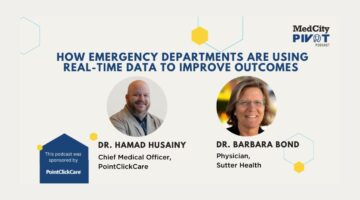
How can AI benefit and improve patient outcome in the emergency department? Watch the latest episode to find out.


By reducing administrative burden and redesigning workflows around human needs, it creates space for what matters most: connection between clinicians and patients.

Open enrollment 2026 marks a turning point in U.S. healthcare. The cost pressures are no longer cyclical; they are structural. For payers and providers alike, the challenge is clear: we must modernize operations, not just manage costs.

The MedTech giants remain indispensable in driving large-scale adoption and validating the market, but the smaller players are increasingly showing us what the future of robotics care can look like.

Too often, providers handle all military claims the same way — sending them to the VA and hoping for the best. But there are multiple payer types, and they function very differently.


Turn complex healthcare data into clear, context-rich insights that drive faster, smarter decisions.

Picture each patient with a computational model of their health where each treatable parameter (like weight, blood pressure, heart rate, exercise, inflammation, and blood chemistry) serves both as a marker for diagnosis and as an opportunity for treatment.